Notes from between the World Cup
Some short observations to keep The Football Fan ticking over while all eyes are on the Americas

It’s all about the World Cup at the moment, so trying to compete for attention is, as Amy Winehouse once said of love, a losing game. But I’m mindful of the need to keep a degree of regularity here, so what follows is a few snippets to keep you occupied.
I suspect I wasn’t alone in failing to conjure up much excitement in the run up to the tournament. Trump’s America is an unattractive prospect, FIFA continues to be generally appalling, the tournament was too sprawling to get to grips with and the pricing – which I wrote about in a post last December called Who wants the world (Cup)? – topped it all off.
I probably also wasn’t alone in suspecting I’d get drawn in once things started. Perhaps not getting too excited, or accepting that I wouldn’t be able to see many games, lowered expectations to reasonable levels. I still think that, like the Olympics, the format is too sprawling to really enable getting hold of it all but I’ve found dipping in and out and keeping a general eye on things is working. I think once the knockout stages start, levels of engagement will rise.
But for all I don’t like the 48-team format, and for all I know the reason for it is to generate yet more money rather than the official reason of giving smaller nations a chance in the sun, I can’t begrudge the players and fans of Cape Verde their joy at securing their first ever finals point. Moments like that prompt grand statements about what football can do - and in this case it was hard to argue.
There have been some disgraceful reminders of the current climate created by the US government, the denial of entry to Somali referee Omar Artan, the aggressive security checks on the teams from Ecuador and Uzbekistan, the shunting of the Iranian team out of the country within hours of the final whistles and these cannot go unremarked upon. These events, and the fear there may be worse to come, certainly don’t project the message of football for all that FIFA promotes.
From what I’ve seem of the TV coverage so far, ITV are winning the battle. Their pundits and presenters have more zip and genuine insight, and the BBC’s decision to anchor coverage from a virtual set in Salford looks to have sucked the life out of it. It’s true the BBC can’t win – taking everyone to the US would have prompted accusations of being profligate with licence-payers’ money – but it’s a basic principle that covering an event requires an actual presence at the event if it’s to be done properly. All that said, who on earth came up with the idea of Emma Hayes in what looked like a kitchen with a blackboard on ITV? Crass stupidity and Hayes – a genuine person and accomplished coach - deserved better.
The narratives of the opening round of games have centred on how the nations making their Finals debut have fared, and how the established giants have fared against them; on how hydration breaks change the way the game is played; on how heavily the big nations rely on individual superstars; and on how those superstars measure up against each other and the legends of the past.
At the end of the 1948 noir classic The Naked City, the narrator intoned that “there are eight million stories in the naked city”. There are five weeks to go in this current America drama, and plenty more stories to come.
Back in the UK, there’s more trouble in court. Burnley won a landmark legal case against Everton which requires the Merseyside club to pay The Clarets £40m in compensation. The argument was that Everton should have been deducted six points for breaching financial rules in 2021-22 rather than in 2023, and that this would have kept Burnley up at Everton’s expense.
Burnley claimed Everton gained a sporting advantage by breaching PSR, Everton claim they were PSR-compliant at the time Burnley were relegated, and point out they have already suffered a financial penalty resulting from the points deduction. The club said: “This ruling sets a dangerous and unworkable precedent for English football, given it is constructed on a principle that a club can be in breach of financial rules at any point in a financial year.”
It certainly raises some pretty fundamental issues, not least about the Premier League’s handling of its members and its competition – remember this is the Premier League that argued no regulator was required as it was doing a perfectly good job. For detail and informed analysis, I highly recommend the writing of Paul Quinn, was has covered possible grounds for appeal, a systemic risk assessment, and possible implications of the case.
On top of this, Leeds are considering seeing Leicester City, and possibly a number of other clubs, over PSR breaches they assert led to them being relegated in 2022/23. There are more details on sports lawyer Stefan Borson’s Substack. Borson asserts that “The 2022/23 relegation battle has now been shown to be a sham,” but arguments about how and if sporting advantage is or isn’t gained look to have some way to go, and lawyers will already be planning where to spend the proceeds of conducting the argument.
All of which raises serious issues for club directors, over questions of potential liability; the game’s authorities, over questions of governance; and for fans, over questions of sporting integrity. As I argued in a recent post, “the feeling that there is something very wrong is building slowly but surely”.
The game is appearing increasingly ungovernable, and it all presents a real challenge to the new regulator, which will have to plot a way forward out of the current mess. The good news is that an independent regulator is more likely to do so than either the individual clubs or the Premier League (which is the clubs collectively). For too long ‘anything goes as long as the money comes in’ has been the mantra, but it is clear that more clarity and consistency is required in applying the rules and preserving the sporting integrity that is central to the game’s appeal.
How do we draw a line under what has happened and move forward to a framework that 1) works and 2) has people’s confidence? That is not an easy question for the regulator to answer, but it’s one that must be taken on.
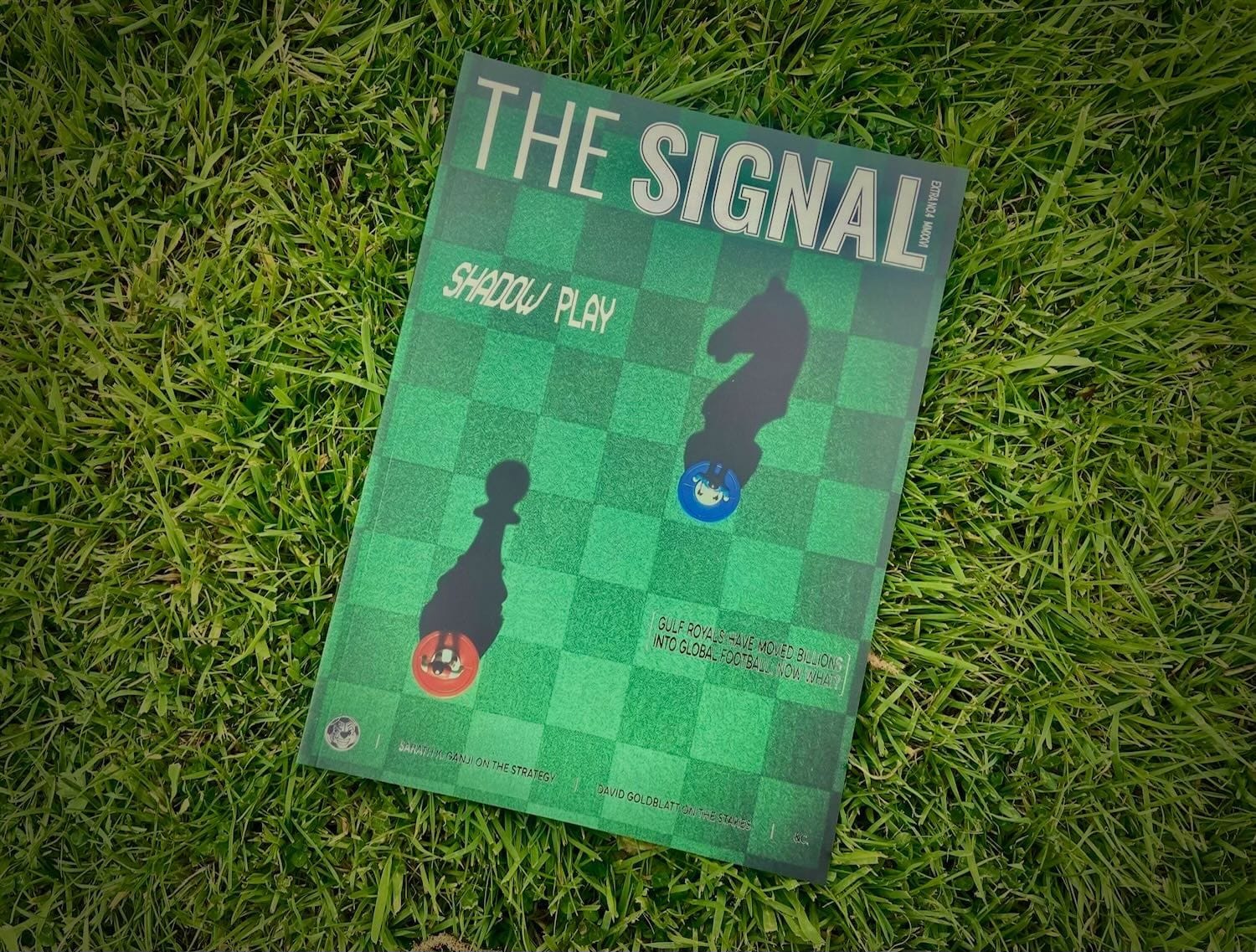
Some unpaid for advertising I am happy to carry to conclude this edition, with, and both are timely. Shadow Play is an excellent and important read from the Human Rights Foundation which “examines how some authoritarian states are increasingly using football ownership and sponsorship to reshape their global image, and distract from violations elsewhere.” I’ll be writing more on this.
Bread and football is a project put together by Iranian visual artist Behnam Raeesian that he describes as “a visual critique of the World Cup as spectacle, distraction, sportswashing, and the political use of football.”
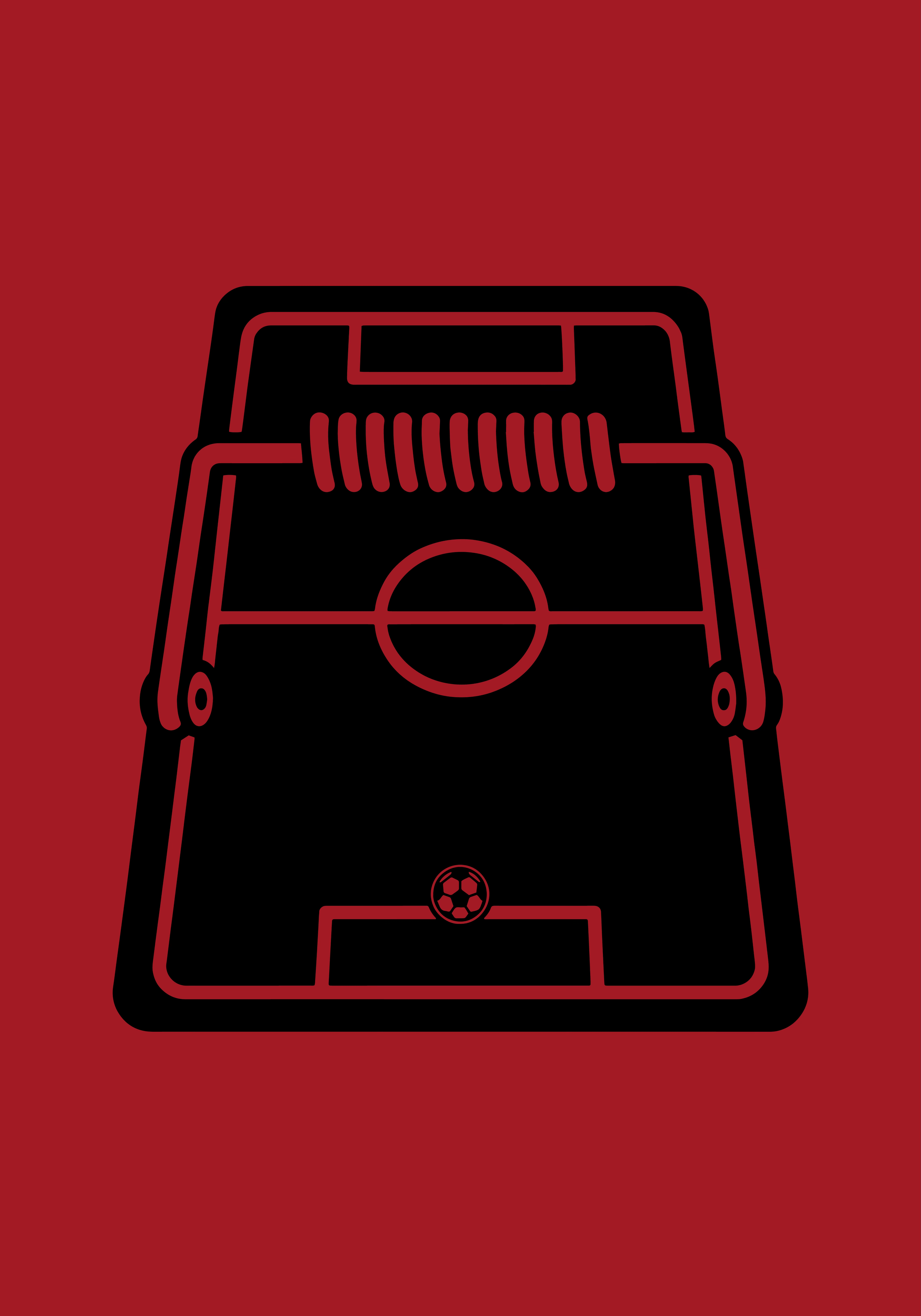
It’s a series of seven posters. The poster shown here is The Beautiful Trap, which Raeesian says sees the pitch “reimagined as a mousetrap, exposing the game as an elegant device for capturing attention.”
Which brings us full circle for this edition.
Lead photo by My Profit Tutor on Unsplash